Showing posts with label green. Show all posts

Thursday, July 9, 2009

new york glimpses: farm-fresh

If you were worried that our week in New York left us starved for the bountiful Portland markets, you can rest safely assured that we did manage to find some good farm-to-table meals. While it might be hard to imagine that such a bustling metropolis leaves much room for agriculture, New York has a surprisingly vibrant farm-fresh community. Let's not forget that NYC does play home to urban CSAs, a thriving Greenmarket network, two Edible publications, and Slow Food USA's national office. We made an effort to see it all.

A lot of the sustainable food efforts begin in Brooklyn (space is, afterall, a bit more available than in Manhattan). Just a week before we arrived, the first-ever Brooklyn Food Conference drew food movement heavyweights to discuss social equity and local food access. And a week after our return, I read about a rooftop farm in industrial Greenpoint that's beginning to supply local cafes. Good things are growing.

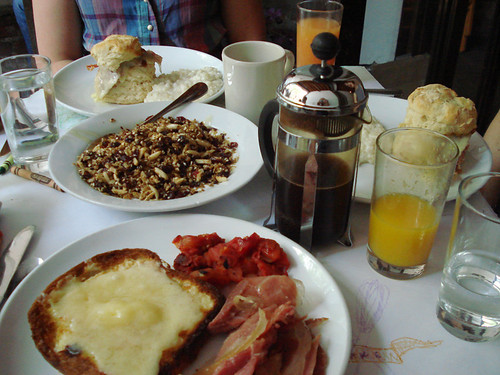
Off a side street in Williamsburg, egg is dishing up simple, farm-fresh meals in a bright and spare space that belies its hearty Southern appetite. With crayons on the tables and groggy, bleary-eyed hipsters waiting on the sidewalk, we should have known to expect some serious hangover-busting vittles. To share, we ordered a serving of the house-made sorghum granola (a breakfast appetizer?), while A chose the biscuit sandwich and I went for the "Eggs Rothko." What a glorious mistake. Of course it was too much food, but at least it was too much delicious food. A's sandwich split a crisp, craggy biscuit to contain a mound of fried country ham, fig jam and farmhouse cheddar. My Eggs Rothko took a spin on a classic egg-in-a-basket by cooking an egg inside a thick slab of brioche, then broiling it all beneath a generous heaping of grated cheese. Taken with a forkful of country ham shavings and broiled tomatoes, every bite was a toothsome wonder.


We enjoyed our meal in the scant shelter of a small front patio, bordered by a miniature vegetable garden. To supplement their adorable street-side tomato planter, the chefs of egg have started a farm in the Catskills, which they document on their simple and engaging blog. Any size garden is an exercise in humility, but for a restaurant, it also offers a hearty dose of empathy with your suppliers.

That same in-house commitment to ingredients and artisan labor informs the staff at Diner, along with their sister restaurants Marlow & Sons and Bonita. We've written before about the Diner family of restaurants and our huge crush on their work, which ranges from in-house butchering to an awesome food journal. Well, after a long time of ogling from afar, we finally had a chance to taste their cooking. Now A and I don't cook meat all too often (even though we still have two hens and 20 lbs of pork in our freezer), but we do like to sometimes order it out if we trust the source. Given the fact that Diner buys whole-animals from local farmers and breaks them down to their chef's specifications, there was no way we were going to miss the meat when we stopped by Bonita early in the week. I had a trio of killer steak tacos, while A went for a deliciously juicy pork burrito. It was worth the wait.


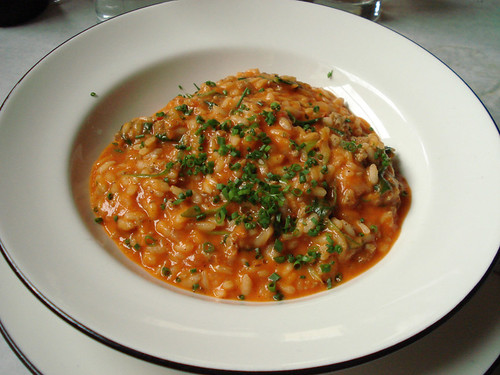
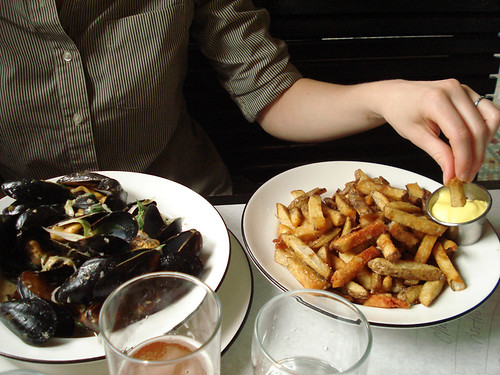
A few days later, after a morning of sustainable food gab with the gracious staff at Slow Food USA, we made our way over to the train-car diner named Diner for an early lunch. The interior was bright and quiet on a weekday morning and charmingly worn-down, with old tile floors and wooden booths. A immediately zeroed in on a bowl of mussels swimming in a tomatillo and green onion broth (with a hearty helping of thick-cut fries, of course), while I ordered Diner's tomato-based risotto with housemade sausage. Both dishes were tangy and savory and completely comforting for a cool, overcast day.


Just around the corner from Diner, Marlow & Sons vends local artisan products from a specialized grocery store/oyster bar. Had we not just eaten, we probably would have grabbed a stool for some local half-shells, but as it was, we contented ourselves by purchasing a food literary magazine and a collection of local chocolates.

We were bolstered to see (and sample) so many restaurants that were emphasizing local sourcing and old-school skills, yet one establishment puts them all to shame: Blue Hill. After last year's Slow Food Nation, A and I started nursing a longtime, big-time chef crush on Dan Barber. Apparently, we weren't alone. Just a few nights prior to our reservation, the Obamas chose it for their NYC date night, garnering some big points for supporting sustainable ag in the process. You see, Blue Hill isn't just any restaurant; it's not even just any restaurant with it's own farm. It is a restaurant with a fully-fledged agricultural education center. A few years after founding Blue Hill on a side street near NYU, Dan Barber connected with the Rockefeller family to open the Stone Barns Center for Food and Agriculture, just 30 miles up the Hudson River Valley. The center runs tours and classes about four-season agriculture and livestock husbandry, while also playing home to a very farm-focused, on-site restaurant.

As much as we wanted to visit the farm, we didn't exactly want to hitchhike out to Stone Barns, so we decided to stay in town and visit the Greenwich Village restaurant. We were seated on the back patio, which has the quiet feeling of an urban greenhouse. From the moment we sat down, we knew this meal would be unique. Before we'd even ordered, our server presented us with a row of diminutive, raw vegetables suspended on a small fence of skewers. This was immediately followed by homemade butter and lardo, paired with kale- and carrot-scented salts, and two adorable asparagus "burgers" on tiny brioche buns. Currently, a lot of chefs are getting awfully coy and playful with their amuses bouches, but something about Blue Hill's approach made it clear that these starters really were an introduction to the restaurant's farm-centric philosophy. They aren't just little foodie jokes, each bite is a primer for the simple, distinct flavors to follow.


I could truly write a lot about this meal, but I'll try to just outline what A and I shared. I ordered:

Spring vegetable salad with pistachio and homemade chevre
Cobia (a firm whitefish) with ramps and prosciutto-wrapped asparagus in a pistachio-caper sauce
A chose the "Farmer's Feast" tasting menu, which included:

Soft-shell crabs with rhubarb and spring lettuce salad
Poached egg in spring greens puree
Berkshire pig with burdock root and rhubarb
Chilled rhubarb soup with fromage blanc sorbet

Everything was phenomenally fresh and displayed a complete devotion to the essence of each vegetable. Every individual component of the composed salad we shared was prepared to best show-off its flavor; some were crisp and raw, others were lightly blanched, while still other ingredients were lightly marinated. I've never had a meal that tasted to simply, so clearly of the fresh produce it used. And I can think of no higher compliment for what Blue Hill is trying to do.

Wednesday, April 22, 2009

planting blind


For the past several years, A and I have patiently made do with a back-stoop container garden. We told ourselves, "When we move into a house with a yard, then we'll start a real garden." Well, that time came and apparently, it also went. Call us chickens (hey, that sounds like a good idea for next year's garden), but we dragged our heels not knowing what (or how) to plant and settled for another year of pots. But we have BIG PLANS for those containers.

I suppose if we were really to consider the logistics of container gardening, we'd realize that we're just undertaking a costlier, less effective version of in-ground sowing. And yet those little, plastic, "terra cotta" pots exude safety - they woo us into believing that they'll protect our little herb starts from the fits of our gardening inadequacy. "Why trust the soil?" they ask, "It's just so deep - you have no idea what's down there." In reality, the containers probably reduce our success rates (and yields) and require more attention and watering. The problem - at least this year - was that damn up-front business of planning. Well, that and a skewed sense of scale.

By the time we worked up the confidence to turn our entire backyard over to raised beds, we were already kind of behind in the process of building frames, tending our compost, and stomping out the extant weeds. We wouldn't have even known about these steps if it weren't for the well-intentioned advice of a good friend of ours. This friend is a qualified gardener, grade A - the sort whose footsteps sprout fully-grown plants in her wake (she even writes well about her garden). Maybe she can't conjure vegetables from thin air, but she is sprouting heirloom bean starts on her office desk, meaning she's leaps-and-bounds ahead of us in terms of gardening skill. And that means that her "simple" advice is predicated on years of accumulated planting know-how. For A and I (who both have unhealthy needs to feel like experts), her gardening encouragement unintentionally pointed our our complete lack of experience.

Time to scale the plans back a bit. Maybe cardoons and fruit trees wouldn't make the cut this year, but we could certainly step our gardening effort up a bit. So, inspired by our friend's abundantly green thumb, we decided that if we were going to resort to containers again, we should at least endeavor to plant our own seeds. This is probably the first time since lima beans on the classroom window-sill that either of us have grown something from seed. So, on an unseasonably hot Sunday afternoon, here is what we laid out:

slow-bolt cilantro
valentine mesclun
loma lettuce & alaska early pea
blue borage
helios radish
cherry jewel nasturtium
french chervil
lemon basil
garlic chives

We consulted a few gardening books, but I'll be damned if I could definitively say that we treated any of these things properly. How do you even plant something at an eighth to a sixteenth of an inch deep? Do you cover the seed with a single grain of dirt? Well, I suppose seed depth is a moot point if we wash them all away with our over-eager watering. And if anything even sprouts, then we'll no doubt be faced with a ruthless amount of thinning; our security measure was to plant dozens of seeds in each pot.

Luckily, I happen to really like the tidy look of bare dirt in our just-planted containers. So, if nothing sprouts, at least it will always look like we've just begun.

Friday, April 17, 2009

unplanned city

This clip is a few years old, but I've always gotten a kick out of it:


It's goofy, but it's also such a simple conceit for an ad - just use the damn shoes, right? No celebrity needed. And yet, I think what really makes the ad so cool is that it is totally unexpected to see this guy vaulting himself over and across the urban spaces that are designed to move people in very different and proscribed routes. Cities dictate model for their own "ideal" usage, while individuals will invariably personalize and flaunt those impositions.

In Portland, as much as we pride ourselves on a DIY ethos, we also tend to *heart* our progressive city government. This means we often end up relying on a top-down sort of urban development. I think it's a good thing that our city can build lasting, meaningful infrastructure, but it also spares us (for better or for worse) the birthing pains of coming up with creative solutions on our own. I'm thrilled by every new bike lane the city stripes, even if they're handed out like candy, but sometimes the trade-off of this fast-track urban development means cluster-f**ks like the Rose Quarter re-development.

So what happens in other cities where citizens have to go it alone to create a livable environment? The Canadian Centre for Architecture in Montreal is holding an exhibit through this weekend called Actions: What you can do with the city, and I just came across their awesome Tools for Actions site, which shares all 99 projects from the show. The centre (er?) gathered both proposals and completed designs from around the world, all of which co-opt existing city structures to create the building blocks for new urban interactions.


Rather than treating existing city plans as obstacles, the groups featured in Actions employ them as unintended stages for talking about community and sustenance. The exhibit offers so many cool, new ideas based on everyday actions like mapping, walking, recycling, and biking, that you could easily spend hours reading the briefs and then tracking down more info on the firms and artists involved. I know I can be pretty food-focused, so it's no surprise that projects like urban foraging, plastic bag gardens, and a city-wide picnic caught my attention. Spend some time looking at all of the actions, some of which might inspire you to change your city on your own. A little guerrilla gardening, anyone?


I wish I was in Montreal to see this stuff live. And I wish Portland had museums that could actually draw these sorts of exhibits. Maybe that's a potential "action" itself.

Tuesday, January 27, 2009

year of living awesomely


I can not think of a year in recent memory that has begun with such a glum national mood as 2009. It was as if everyone collectively decided that the end of 2008 was so disheartening (I'm looking at you, economy) that we might as well resign ourselves to this year being even worse. Time to hunker down, hole up, and stick it out. Let's call it the "Year of the Fallout Shelter."

Now, what surprised me was that a lot of writers didn't necessarily take the same tack. While there have certainly been a fair amount of dire predictions for restaurants and shops closing in the coming year, a lot of critics seem like they took it upon themselves to argue against their own apocalyptic visions and implore readers to think about the impact of their dollars.

Portland Mercury's Not Invited Back 2009 list featured a rant against "status dressing" that offered this positive upswing:

Taking its cue from a time when purchases were made bearing the long term in mind, and quality took precedence over mass-marketing and instant gratification, even the fashion world is adopting a more serious approach. And with manufacturing jobs in your country, and your city, directly affecting the quality of your own life, you might find yourself more inclined, when you do spend, to put your money back into the hands of your neighbors.
That same issue interviewed local designers on their advice for the new year, to which Moth Love owner Gretchen Jones responded that 2009 should focus on:
Simplicity in design/function/production. Inflated outsourcing of overly available goods versus handmade, independent, and SLOW (made-to-order) fashion. Approach design uniquely. Be savvy in your selections and who you support. Yours is mine, is ours, is mine. This is the time to refine.
There it was - another plea for carefully-considered shopping. Over the next few days, I caught notice of similar sentiments in a lot of New Year's articles and not just on fashion. Food critics implored their readers to patronize local restaurants more in the coming year and Carrie Brownstein, over on Monitor Mix, resolved to better her concert-going, paying more money for worthwhile bands and avoiding free shows.

But of all the articles and ideas I've collected, the one that keeps resonating for me comes from last November, though it perfectly primed me for everything I later read. Bruce Sterling, on the Worldchanging blog, called for a dramatically redefined relationship with our stuff. (To really get into it, read past some of his first thoughts on global living to the second-half, when he starts talking about the "hairshirt green" mentality.) Sure, there is some geeky multi-tool evangelism in there, but these ideas are really rich:
You need to re-think your relationship to material possessions in terms of things that occupy your time. The things that are physically closest to you. Time and space.

Do not "economize." Please. That is not the point. The economy is clearly insane. Even its champions are terrified by it now. It's melting the North Pole. So "economization" is not your friend. Cheapness can be value-less. Voluntary simplicity is, furthermore, boring. Less can become too much work.
Read the whole damn thing. Seriously. It's simple and encouraging advice:
-Only own things that improve your life in some way (you can set those terms).
-Buy fewer, nicer items from which you'll get more use.
-Live better.

Even though his general idea is familiar, Sterling brings to it a new emphasis on quality of life. Women's magazines have been preaching a similar ethos for years (how to style one dress for five looks), but always with the focus being on frugality. The "voluntary simplicity" movement has also argued a related concept, but all too often, as Sterling points out, it's quickly been pushed to the extremes of "buy nothing" day, which doesn't work towards any improvement of a system, just its refutation. Where, then, is the room for deliberate, positive action?

So, before this post becomes a bibliography of all of the things that have been bouncing around my brain recently, I'm going to (try to) lay out my own little synthesis of all of these New Year's predictions and exhortations: the P & A economic stimulus plan!

It comes down to this: take Sterling's idea, but extend the quality of life concept to your community. Make your purchases from businesses that make good neighbors. Choose products that contribute to a better world. Easy.

Really, this shouldn't be difficult to adapt to this idea. You already make these decisions about the kind of world you want to live in all the time when you make purchases. For example - do you want to live in the kind of world where you don't stink? Then you buy deodorant. See how simple this will be?

First off, this is going to mean some serious spring (February?) cleaning and editing. We'll clear out the things we never use and put them under the scrutiny of a 17-year old at Buffalo Exchange to see if we can make a few bucks back on them. Anything we can't sell is going to Goodwill.

Now I'm not advocating for going on a shopping spree to single-handedly kick-start the economy, but I am saying that purchases are inevitable and they need to be considered. For us, this might mean that when we replace our computer, we do it at a local shop. If we're needing new threads? We'll make fewer, smarter purchases from better boutiques and stop wasting our time with places that sell serialized fashion. And when we're hungry (which we'll inevitably and frequently be), we'll make sure we're eating at restaurants we love and continuing our farmer's market boosterism. Skip IKEA. Forget Target. Go vintage and handmade and locally-owned. The trouble will surely come with the basics - how many small office supply stores are in business any longer; is there even a place to buy socks and underwear that isn't in a mall? It will be a year of searching these places out.

2008 shaped up to be the "year of doing it for ourselves" - preserving, baking, stitching, cooking, and making of all sorts. Now, those practices have become so ingrained in our routine that it's difficult to remember how we passed our time before them. They certainly won't be going anywhere, but for 2009, let's get over the worn-out idea of a "year of living simply" and make this fun: a year of living awesomely.

Monday, November 24, 2008

the raw and the cooked

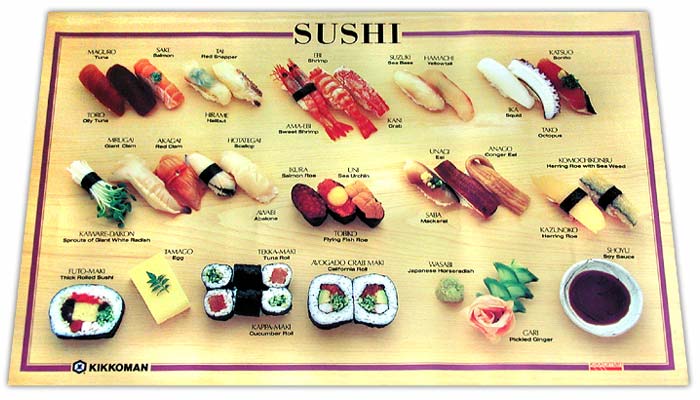
If two years ago you asked me for a run-down of my favorite foods, sushi would definitely have made the cut. That rich flavor and unctuous texture of the raw fish was enough to make me drool. Like I'm doing right now thinking about it. You can call me a hypocrite for mocking "living" fudge or raw bread, but some things are meant to be cooked and some aren't. Fish demands a gentle hand at the stove, making it an excellent candidate for being served raw. Bread, on the other hand, should be baked; not dehydrated.

But I'm getting off-topic - the point is just how much A and I used to love sushi. Today? That's a different story. It sure sucks to get a conscience. Maybe you can chalk it up to to reading too much when daily reminders of doom-and-gloom, social and environmental collapse leave you morally paralyzed. The more and more we read and heard, the worse we felt about eating seafood. For a sense of the kind of laugh parade that is modern seafood writing, read Mark Bittman's excellent New York Times editorial on the future of fish.

Recently, the Monterey Bay Aquarium Seafood Watch group released a new sushi-centric version of their great sustainable seafood guide (download PDF). Helpfully, it lists all of the Japanese names for the best fish choices. Unhelpfully, you've probably never seen any of the best choices in a sushi restaurant. On top of that, the few choices you have heard of get pretty specific about fishing practices. I'd wager that if you ask most sushi chefs in America if their tuna is US troll/pole caught rather than longline, you'll get a blank stare. Here in Portland, almost all sushi passes through a bizarrely infamous international cult. Hey, maybe they're a sustainable cult, but with only one supplier for most restaurants, there isn't a lot of choice in terms of fish sourcing.


Meet Bamboo Sushi. Brainchild of a former owner of the indie-chic Masu, it couples hip design with focused sustainability. Not only do they espouse green principles and focus on responsible sourcing, they are actually the first Marine Stewardship Council certified restaurant in the US. I think A and I almost wept when we ate there on Wednesday evening - for the first time in over a year, we went out for sushi. Everything was incredibly fresh and their preparations were really inventive. We swooned over each bite of the rolls and awkwardly sawed our nigiri selections in half with our chopsticks to make sure we all got a taste of everything.

To tide us over between visits to Bamboo, maybe we'll have to branch out into other Japanese foods (it's either that or we make miniature gunkan maki rolls with bay shrimp). Luckily for us, Bamboo offers some inspiration - one of their best offerings is a tsukemono plate of pickled eggplant, cabbage, daikon, onion, ginger, peppers, and squash. Over the weekend, we tried out a Japanese-style quick cabbage pickle, piecing together our own recipe from a mix of different books and websites. The results were great, but pickled cabbage just isn't the same as sushi. At least Bamboo has a happy hour, but is "low priced sushi" really a valid excuse to cut out of work early? It should be.
__________

Simple Cabbage Tsukemono
Adapted from Justhungy.com and Dorothy Lesem's
Preserving in Today's Kitchen

1 head of napa cabbage
1 1/2 teaspoons kosher salt
1/4 teaspoon chile flakes
zest of one lemon
1 teaspoon rice vinegar
1 teaspoon fish sauce
1 teaspoon sesame oil

Clean and core the cabbage, chopping the leaves into 1-to-2 inch pieces. Place the cabbage in a large glass bowl and toss with the salt, chile flakes and lemon zest. Cover with a weighted plate that fits inside the bowl and leave to sit in the refrigerator for about an hour. A lot of moisture will be drawn out of the cabbage - drain off the liquid and toss the remaining cabbage with the vinegar, fish sauce and sesame oil. Serve with rice and broth simmered-tofu.

Friday, November 14, 2008

chef crush

I love Dan Barber and I don't care who knows it. Maybe I identify with something about his geeky demeanor, but I swear, the guy could put dirt on a plate and I'd probably think it was clever cooking. A, loving wife that she is, is indulgent (and I have a hunch she finds him pretty cool, too). I think it probably all started with this story about a girl he once dated:


Or maybe it began with seeing him at Slow Food Nation when he recounted
his visit to a Spanish farmer who raises "natural" foie gras geese without the use of gauvage (watch this video
of the same speech at a different conference).

Then again, my fascination could have stemmed from this review of a dinner at his restaurant, Blue Hill at Stone Barns, which claimed the breathtakingly fresh courses made it the "most important Restaurant in America."

Actually, it could just be his dedication to forging a new relationship between farmers and chefs. As the Creative Director for the Stone Barns Center for Food and Agriculture, Barber helps guide the educational efforts on the working farm that supplies the majority of produce to his two restaurants. Not only that, but one of his restaurants is
directly on the farm, allowing his chefs to pick their own greens and work directly with the animal husbands. The Blue Hill website features video profiles of some of their providers and the story of Barber's efforts to restore his family's farm.

And he's an keen thinker and polished writer, to boot.

Cooking is just about the most macho thing I do. In spite of being a pretty slight, geeky guy, I'm still drawn to the knives and heat and swagger of the kitchen. That's not to say I'm running six flame burners at home every night, just that kitchen manliness is one of the few places I'll throw down and jump at the chance to
consult on grilling or carve something with a big knife. (Truth be told, I've got some chef crushes on the ladies, too.)

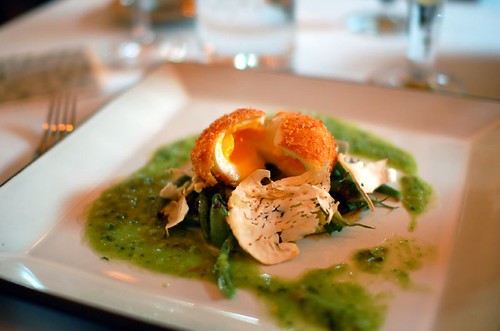
Still, I'm probably not kidding anyone with my kitchen posturing. And I think that is what attracts me to Barber's cooking - there is an intellect behind his efforts and something very gentle about what he's doing with food. At the Stone Barns Restaurant, there are two menu choices: five-course or more courses. In place of a list of dishes, they offer a chart of what is in season, from which the chefs will create the nightly meals. The results, from what I've seen and read, are really stunning, like this salad of a hazelnut-crusted poached egg with matsutake mushrooms, pistachios and garden gazpacho:


For a sense of the kinds of simple, clear flavors Barber coaxes out of his ingredients, just have a look at this fennel soup from New York Magazine.
Now we only need to figure out how to get up the Hudson Valley the next time we visit New York...

Thursday, August 21, 2008

freezer dreams

A and I both love seafood, and happen to live around the corner from an exceptional fishmonger. Still, we always end up worried about declining fish populations and balk at the high prices of sustainable choices. Then we end up with a quarter-cup of sustainably-miniature Oregon bay shrimp or four runty sardines. Not exactly dinner.

So when the
Iliamna Fish Co. set up an agreement with our CSA farm, Viridian, to offer a salmon share, we signed up before thinking what we'd do with all that fish.

Even after splitting our share with my parents, we still have seven two-foot long planks of frozen fish, bundled in twine. I guess it is time to start thinking up some creative uses for salmon. According to A, our problems did not stem from ordering 25 pounds of frozen salmon, they came from not having a chest freezer. This has been a common refrain around our house for the last few months, as we've packed our freezer more and more full of berries, stock, chickens and freezer jam.

This, I imagine, is what A sees when she sleeps:


Actually, that isn't entirely true; there may be frozen berries and sides of pork leaping over it, as well.

It certainly hasn't helped that some of our friends recently purchased a chest freezer, which they placed in their office, just off of their kitchen. "If they can live with one inside their home," pleads A, "why can't we just fit our own freezer in here?"
pointing to where our couch currently resides. I have heard recommendations for placement everywhere from "in the corner" to "in the closet" to, my favorite, "in the bathroom." I think that everywhere A looks in our apartment, she sees a custom-shaped chest freezer ready to be plugged in. I need to stay strong, because our lack of a chest freezer is the only thing keeping A from ordering 65 pounds of slaughtered hog. Not that I'd be entirely opposed to it.

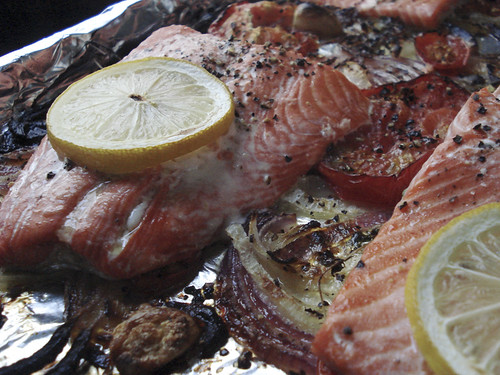
So, how was the salmon? Well, for our inaugural meal, we tried out a recipe from Saveur for
broiled salmon with tarragon, tomatoes, and onions
to use up a bunch of our summer ingredients. It was dead simple and incredibly flavorful. The cooling anise flavor of the tarragon and pastis balance perfectly with the tang of the roasted tomatoes. And the salmon (oh!) was firm and deeply-colored and buttery-tasting.

Right now, as I admit what an amazing deal it was to buy all of this salmon, A is probably claiming her first victory. That, and comparing dimensions of chest freezers online with the width of our doorway.

Friday, April 4, 2008

the godfather

We all have certain books sitting on our shelves that we know we ought to read, but always postpone. They frequently are books lent by friends or classics that we've been shamed into adding to our list. My own guilty example is Swann's Way by Proust. It is not something of which I'm proud - I picked it up when I was still taking French and because it struck teenage-me as a book that broadcasts intelligence - but when I notice it on our bookcase, it weighs on me with a heavy feeling of obligation. I've tried to read that book so many damn times and I just have to say: when a book begins with a discussion of sleeping habits, I'm probably not going to last.

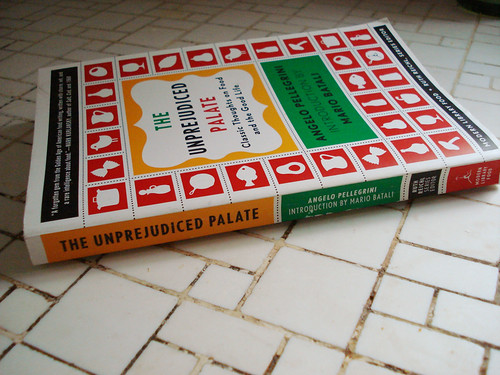
That said, I came across the most wonderful surprise of a book this last weekend when I resigned myself to picking up one of these abandoned books and slogging through it. Happily though, it only took a few words of Angelo Pellegrini's introduction before I was wholly hooked and readily devouring his story. I can best describe The Unprejudiced Palate as the soapbox of a charming, practically-minded, opinionated (as when he entirely dismisses saffron) and very progressive bon vivant. Full of grand, declarative pronouncements on how to eat (which, as the New York Time recently pointed out, the Italians do with such aplomb), Pellegrini's writing offers one of the most coherent arguments for the good life that I have ever read. Even throughout the last third of the book - which he devotes entirely to recipes - Pellegrini remains thoroughly readable, precisely because all of his recipes are penned in such a clear and persuasive voice.

Do not mistake Pellegrini for some over-privileged epicure - all of his statements are firmly rooted in the value he places in honest labor and cultural knowledge. He advocates humility and tradition over decadence and indulgence and, because of this, sounds as though he is writing from the middle of the current dialogue over the politics of sustainable food. Over the last week since I read his book, I have come across numerous articles that show just how contemporary
The Unprejudiced Palate is for having been written in 1948.

Last week in the New York Times, Eric Asimov offered his opinion on how parents should introduce their kids to alcohol, which brought to mind one of my favorite passages from the book:

"One summer morning several years ago, I was having an early breakfast with my three-year-old daughter in a small hotel in Utah. When the waitress asked what I wished to drink, the little girl announced to the bleary-eyed salesmen and the shocked grandmothers in the dining room that she would take coffee if they put a little rum in it. Since I had anticipated the possibility of frustration en route, I drew a little flask from my brief case and obliged the infant toper with a spoonful of rum in her coffee and milk. When we left the dining room, I felt certain that in the opinion of my fellow guests I hadn't scored much higher than an old soak and a corrupter of youth.

If, however, there was any wise among them, they must have seen in the incident a practical lesson in temperance. My daughter is now twelve. She still takes a teaspoonful of rum in her coffee and milk every morning. To date she has consumed approximately four thousand teaspoonfuls, or enough, say, to kill a whole circus of elephants."

This glib tone paired with common sense is absolutely classic Pellegrini. From the immigrant's point of view (Pellegrini came to the States shortly before the Depression), all of the brouhaha surrounding booze in the US is patently absurd and fully the result of a skewed relationship with food. "The self-appointed arbiters of the American's liquid diet," he writes, "have perverted that Hellenic virtue into a Puritan vice." Precisely by removing wine and drink from everyday conviviality and relegating it to bars, Pellegrini believes that Americans created their own drinking problem. Simply put: if you raise someone to appreciate the craft involved in alcohol and its place in a culture, they'll grow up to respect it.

Pellegrini argues that this embrace of excess in things that should be appreciated in their rarity is at the heart of America's distorted notions about food and health. One of the most interesting aspects of The Unprejudiced Palate is the abundance that Pellegrini finds in even the leanest of times and with the humblest of ingredients.

"A bunch of green onions, a few herbs, a handful of spinach, a little grated cheese and six eggs, can be fused into a delicious main course for the average family. The possibilities for going somewhere from nowhere are literally unlimited. They cannot be learned, of course, by those who persist in going to the grave on meat, potatoes, and gravy."


Because Americans have latched onto a handful of foods and consumed them in epic proportions, they have not only sacrificed their health, but also a lot of their ability to cook and even appreciate the value in alternatives to their current ways.
By letting go of the myriad edible joys in the world and forgetting what they tasted like, it was a short step before stores were filled with imitation foods - the block cheddar "cheese" and bologna "salamis" that so perplexed the young, newly arrived Pellegrini. To me, this sounds a lot like Michael Pollan's recent talk in Portland in which he discussed the inviolable position of meat in the American diet:


But truly, the greatest argument Pellegrini makes for switching your diet towards more whole foods and vegetables is that, when freshly picked, there is simply nothing better:

"But above all else, they [two sewer-worker (and Italian) friends of Pellegrini] take great delight in eating what they produce in their gardens. While they argue about anything under the sun, and even about some things above the sun, they can never find reason to quarrel about this: that you can't beat what you grow in your own garden."

Across the country, growing numbers of people are currently seeing the value in replanting portions of their lawns or ornamental gardens with edible crops. In a sense, it is a return to the victory gardens that were so successful when Pellegrini was writing. Between a recent CHOW article on
urban vegetable gardening, Fritz Haeg's Edible Estates, businesses like Your Backyard Farmer, and the "Food Not Lawns" movement, it is clear that people agree with Pellegrini on the importance of connecting with your food from soil to table.

"If you like your fruit ripened on the tree, bathed with the early morning dew or warmed to it very core by the midday sun, you must grow it on your little plot of earth. If you live in a climate where that is not possible, or if you are among the unfortunate millions caged in dainty little flats, I weep for you a brother's tears of compassion while I pray for your early release from bondage. But if you have the necessary facilities and still prefer the shade of the willow to the taste of a ripe peach, well, who am I that I should intrude upon your eccentricities?"

What struck me about the people's stories in the CHOW article were the vehemently negative reactions some of these gardeners received. It never ceases to amaze me how angry people can get when others strive to do better (or even just do "different"). Take for example this recent lambasting of Slow Food from Metropolis. I fail to understand where the author's apparent anger comes from - is he honestly defending McDonald's? Even if he is, how is it a problem for him that Slow Food hopes to preserve food traditions from being lost to the advance of narrowing, standardized food choices? And you don't have to read the well-written rebuttal (but you still should) to understand just how poorly Sterling understands what Slow Food does. All of his loaded language (ignore all of the word choices like "infiltrate" and just try looking up "myrmidon" in a dictionary) makes it seem as though Slow Food is a conspiracy to secure luxury comestibles for the super-wealthy. In fact, what Slow Food does is work to increase access for everyone to a diversity of foods - the very foods that used to (and, in many parts of the world, still do) sustain cultures that are the very opposite of privileged. And, I hate to have to explain it this simply, but food cannot exist in a vacuum - there need to be consumers in order for producers to have an outlet for their work.

So what really irritates me (& I believe would vex Pellegrini as well) is this tired and unfounded critique of enjoying good food as being elitist. As Pellegrini wrote (and he heaps just as much blame on chefs as on "gourmets"):


"They have broadcast a dastardly falsehood, perhaps to give a certain status to their labor of love - that cooking is an art. The implication of all their dithyrambic spewings on culinary matters, despite their protestations to the contrary, is that excellent food and drink are achievements in refinement beyond the attainment of ordinary mortals. [...]
The prevailing view seems to be that the preparation of a dinner in any way out of the ordinary means hours and hours in the kitchen and "an artist's touch" in the transmutation of ingredients. This notion, for which the precious cookery books are responsible, is as erroneous as it is widespread."


Essentially, as Pellegrini argues, enjoying and creating wholesome, delicious food has been distorted into snobbery; as cooking became equated with art, eating changed into an act of purely aesthetic connoisseurship. (While we are on the subject, can we agree to stop using the term "snob" as though it is a good thing? I understand the concept behind embracing a maligned term for something you love, but does "wine snob" or "music snob" or any such snobbery really do your passion justice?) What is required to rescue food from its removed, rarefied pedestal is exactly what Slow Food does - getting eaters to directly engage with it. Too many people, Pellegrini scolds,

"...are sufficiently urbane and metropolitan to enjoy heartily a good dinner when it is served to them, but their gastronomic self has remained immature out of sheer neglect. [...] The difference between a gourmet and one who eats macaroni salad is precisely the difference between one who enjoys turnip greens and will bestir himself to satisfy a desire, and one who enjoys them but will do nothing about it."

To help restore the lost dignity of simple foods and cultural traditions, Pellegrini argues, we need to be willing to try our hand at tending our own gardens, stirring pots, and crushing grapes. We simply must reconnect with the labor and craft of eating. I can not imagine a better duty.

Monday, February 4, 2008

blood, sweat and quiche

Last weekend, we may have made the meal of the year. I know it's a bit early to declare something like this, but truly, it was spectacular. We had agreed to watch my in-laws' puppy (a task that, however adorable this puppy is, made me vow to forgo puppies and children for the next ten years) and consequently found ourselves stuck inside for most of the weekend. Undeterred by this turn of events (it was raining, anyway), we spent most of the weekend making food: muesli, sourdough no-knead bread, chocolate chip cookies, lavender shortbread with sea salt, and the aforementioned meal of the century. What else were we to do? Little Oscar, only three months old, needs to go outside to do his "business" after nap-time or active play, which by my calculations was about 95% of our waking hours. So, we cooked.

THE MEAL was truly restaurant quality (and easy to boot): poussin marinated in paprika and olive oil, then broiled and placed over lemony sauteed kale and onion resting on a bed of pillowy soft polenta, the whole meal drizzled with a pomegranate reduction. It was based on a Mario Batali recipe with the addition of polenta we'd recently acquired from Ayers Creek Farm (read more about them
here). It was also a triumph of eating locally, something we've been working into our lives more and more these days. The kale and onion were direct from Oregon farms, the polenta from Ayers Creek, and the poussin sourced locally by Viande Meats. I tell you all of this not to gloat, nor to preach, but simply to provide a contrast to a time when things were not so easy.

Eating locally provides plenty of pleasures. There are nights (most nights) when I am astounded by the variety, the bounty, the incredibly tasty (and surprisingly easy) combinations that come forth from within a 100 miles of where we live (see above, for emphasis). However, as with anything, there are also the lows...the nights that look more like last Thursday. These nights roll past 8:30 with P retreating from my grouchiness to the bathroom to shave, while I hungrily pick at my chicory salad until all that remains is a pool of dressing, both of us waiting for the quiche in the oven to finish its long journey from raw ingredients to plate. [I should qualify this by admitting that we have never been very successful when making quiche. I know you may laugh at this. Quiche is supposed to be one of the quick fixes of home-cooking: mix up the eggs and milk, toss in some vegetables and maybe some cheese, throw everything in a tart shell (pre-prepared for extra convenience) and pop it in the oven for 45 minutes. Voila, dinner! Ours normally take twice that cooking time and never seem to have quite the firmness that we desire.]

There were a few hurdles during the meal that, had we been making this meal a year ago, probably would have pushed us to change course. The first, and probably most significant warning sign came in the form of dairy. We had decided to substitute milk for the cream the recipe called for and had picked up a gallon of whole milk from a local dairy. Or so we thought. P decided to take a quick swig before measuring the appropriate amount and immediately scrunched up his face. "Nonfat."

Oh, the horror.

Call me creamist, but I maintain that there is no earthly reason to drink/cook with anything less than 2%. You might as well be drinking water and, frankly, water tastes better. The evil fascists (actually very nice, friendly staff people) at the neighborhood grocery store must have cruelly switched bottles on us and, in our excitement to buy from a local dairy (with a returnable glass bottle, no less!), we had fallen for their scheme.

But, before I make you think this post is simply a diatribe about the evils of watery milk, let's just say that I blame the milk for the endless cooking time of the quiche and leave it at that.

The real problem with the evening was not that it was a night where everything seemed to be going wrong, ending with us eating dinner a full three hours after we had started cooking. There were many points during the cooking, and the waiting that followed, at which we could have abandoned the meal for something faster. At around 8:00, P noticed that I was getting a hungry look in my eye (never a good sign) and mentioned that maybe we should grab some food at a nearby restaurant. But the more we cook at home, the more I make a point to eat consciously, the less I feel like going out, and especially not for just any food.

Cooking locally and from scratch can become a sort of addiction. Once you are in the rhythm, you realize that cooking from scratch is not the chore that its made out to be (rarely the ordeal that I describe above). It can be incredibly soothing to watch the flour, water and yeast combine as you mix a bread dough and incomparably satisfying to taste the finished project. And there's the second layer of the addiction: taste. Home cooked food tastes differently than food you'll find in a restaurant. Of course, it tends to be less rich and salty, but the flavors can often be more distinct, whole and comforting. Eating local foods in the season in which they're meant to be eaten only heightens these tastes. Lately, it's the meals we make at home that I crave on a regular basis, the special occasion restaurant food that I want to taste on just that - a special occasion.

To compound these feelings, there is the inevitable guilt and confusion that I find when eating out at many restaurants. And no, this is not a concern about weight gain. Whereas before I used to eat a pile of take-out Thai without blinking an eye, now I find myself blinking both and, often, losing my appetite. When you know many of the people who grow the food that you eat, it's hard not to think of them as you bite into the factory farm chicken, the green beans from South America and the watery slice of tomato (in the middle of winter, no less). Not only that, but I've tasted eggplant in the height of the season, when the flavor is rich and fruity, the color vibrant, and the flesh firm, but tender. Eggplant in January just isn't the same.

Faced with this barrage of questions, and given my view that eating seasonally, knowing your growers, and putting some of your own labor into the food that you eat makes it taste better, I think I'll take a three hour quiche every so often. Again, see the opening of my post for more reasons to stay the course. Not that it matters here, but it was, without a doubt, the best quiche we've ever made.


Tuesday, May 22, 2007

does your wedding have a moose?

When I started compiling links for this post, I felt like sharing some of our more indie/DIY/alternative wedding ideas might be fun or helpful for people to look at.

Then my mail arrived.

In the last two months, I have seen articles on sustainable and socially-responsible weddings in everything from ID to the New York Times, the Sierra Club, Brides magazine, and online wedding-overload-emporium, The Knot. This year has even seen the debut of an online wedding magazine devoted exclusively to green nuptials, portovert (which seems to be targeted more towards those interested in spa treatments and the color green).

With all of this recent press it seems like every publisher is just trying to make sure they aren't left behind in the coverage of green weddings. At a certain point, it all starts to just feel (unfortunately) like a fad. Still, if you are a magazine looking at jumping on to a wedding-theme bandwagon, sustainable weddings are a much better choice than jumping on (or maybe, for that matter, creating) other bandwagons.

None of this will stop me from adding my voice to the cacophony of eco-chatter.

What is interesting to me about this green-minded wedding trend is that the tone of most of these features, excluding the NYtimes and Sierra Club pieces, doesn't differ much from the regular Martha's Vinyard-linen-and-lace-caviar-canape fare normally seen in wedding mags. The main difference is more wildflowers in the decorations. I know there are good tips, and probably an earnest intern out there gathering the details for these articles, but does it seriously relieve anyone's concern over the state of our planet that, thank God, bachelorette getaways can now save the environment?

Now, I know that the demographics for these various activities probably skew towards each other, but having yoga retreats and serving vegetarian food does not necessarily make your wedding environmentally friendly. By offering a $100,000 budget option (vintage couture gowns?), portovert just makes the green wedding option conform to typical bridal rag standards of over-the-top-princess-for-a-day luxury. I just feel as though it makes it a fashion statement, rather than an exercise in considering the weight of your choices.

For all of the eco-hype this wedding season, change to the wedding industry does not seem to have taken real root. A lot of the options that I have seen bring to mind a Crate & Barrel catalog we got in the mail the other day that advertised things with "organic appeal" or "natural textures"—green-sounding language with no substance behind it. The "appeal" of being green appears to have garnered our cultural attention without too many efforts to change the status quo. Decisions that would have been simpler by being green-conscious are still simpler and those that would have been more difficult by demanding sustainable options still require that extra dedication and searching.

By choosing to feature seasonal, local flora and harvest crops, our decorations can be kept simpler and put off until closer to the event. Using a small-scale caterer has made that entire portion of the planning process a pleasure—their menu will be seasonal, locally-based and good and rustic. Meanwhile, tracking down recycled or Forest Stewardship Council-certified papers and soy-based inks for invitations has been an ongoing task of calling local printers and driving around to paper suppliers, only to find a limited range of options.

As for the moose, that was something that was made considerably easier (and more awesome) by seeking out a local, progressive events space. That moose is a resident of our event site (and a family heirloom of the president of the building's main tenant - no new moose were harmed in the planning of our wedding). The Jean Vollum Natural Capital Center is home to Ecotrust, which has to be one of the coolest environmental organizations I know of (and, completely coincidentally, Amanda's workplace). They focus on preserving regional ecosystems through strengthening local cultural systems and economies - the way more conservation efforts should be undertaken. More importantly for our wedding, they renovated a great old warehouse in the first LEED gold-certified building restoration in the country, providing us with a beautiful venue for our wedding on their rooftop terrace, overlooking their very own green roof!
The building is stylish, urban, and accessible by public transportation (all things that many people don't think of when they imagine environmentalism as a bunch of hemp-clad hippies eating kamut-grain trail mix in the woods). In a way, I suppose that this reflects one of the good things about the recent green wedding articles—they all show weddings that manage to be green while still having modern, cool looks. The attitude has definitely changed about the appearances of the green movement. We just need to watch that being fashionable and green doesn't get confused with being fashionably green.

***
Maybe you'll call this all a case of "the pot calling the kettle black" and say that we are probably doing many of the same things, but I suppose that this whole craze over green weddings irritates me on the same level that "Organic Living" or "Real Simple" magazines do for their underlying absurdity.
We are just hoping that our choices don't get viewed solely in the light of the latest trend, but that they create a wedding that is meaningful to us and suitably reflects us and our quirky little city. So while everyone's wedding this season may be green, they don't all have a stuffed moose overseeing their celebration.

PS.

One of the best ideas we've seen was the result of a partnership by portovert and a carbon-credits company. They've taken the concept of purchasing carbon offsets and tailored their carbon offset calculator specifically toward the guest travel surrounding a wedding. Now that's a pretty cool result of the buzz around the green weddings.