
A finally finds the time to write something for the blog again, and what do I do but rain on her parade? Well, it wasn't me, actually, and it wasn't rain; it was hail. Boatloads of it.
Nothing smacks you in the face quite like the hubris-deflating blow of a mid-Spring hailstorm. We thought our sprouts were doing so well.
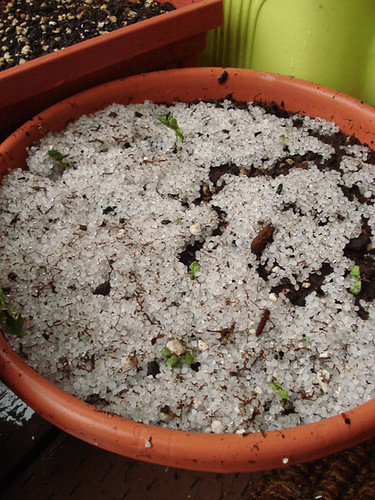
A block from our house when it started to fall, we couldn't see anything, so I parked the car in the middle of the street and made a mad dash for our porch to rescue our seedlings. Our lettuce, radishes, and peas were two inches buried by hails and standing water - it wasn't pretty. When the storm passed by (not two minutes later), A parked the car and came to find me sitting in a puddle and picking hailstones out of our planters one at a time. She went and got me a spoon (isn't she helpful?).
It's been a few days since the hail and about fifty percent of the little starts seem to have made it. Now we just have to see if they can survive the on-and-off windstorms that have followed the hail.
Oh, and I promise this hasn't become a gardening blog.
Monday, May 4, 2009
sproutpocalypse

Wednesday, April 22, 2009
planting blind
For the past several years, A and I have patiently made do with a back-stoop container garden. We told ourselves, "When we move into a house with a yard, then we'll start a real garden." Well, that time came and apparently, it also went. Call us chickens (hey, that sounds like a good idea for next year's garden), but we dragged our heels not knowing what (or how) to plant and settled for another year of pots. But we have BIG PLANS for those containers.
I suppose if we were really to consider the logistics of container gardening, we'd realize that we're just undertaking a costlier, less effective version of in-ground sowing. And yet those little, plastic, "terra cotta" pots exude safety - they woo us into believing that they'll protect our little herb starts from the fits of our gardening inadequacy. "Why trust the soil?" they ask, "It's just so deep - you have no idea what's down there." In reality, the containers probably reduce our success rates (and yields) and require more attention and watering. The problem - at least this year - was that damn up-front business of planning. Well, that and a skewed sense of scale.
By the time we worked up the confidence to turn our entire backyard over to raised beds, we were already kind of behind in the process of building frames, tending our compost, and stomping out the extant weeds. We wouldn't have even known about these steps if it weren't for the well-intentioned advice of a good friend of ours. This friend is a qualified gardener, grade A - the sort whose footsteps sprout fully-grown plants in her wake (she even writes well about her garden). Maybe she can't conjure vegetables from thin air, but she is sprouting heirloom bean starts on her office desk, meaning she's leaps-and-bounds ahead of us in terms of gardening skill. And that means that her "simple" advice is predicated on years of accumulated planting know-how. For A and I (who both have unhealthy needs to feel like experts), her gardening encouragement unintentionally pointed our our complete lack of experience.
Time to scale the plans back a bit. Maybe cardoons and fruit trees wouldn't make the cut this year, but we could certainly step our gardening effort up a bit. So, inspired by our friend's abundantly green thumb, we decided that if we were going to resort to containers again, we should at least endeavor to plant our own seeds. This is probably the first time since lima beans on the classroom window-sill that either of us have grown something from seed. So, on an unseasonably hot Sunday afternoon, here is what we laid out:
slow-bolt cilantro
valentine mesclun
loma lettuce & alaska early pea
blue borage
helios radish
cherry jewel nasturtium
french chervil
lemon basil
garlic chives
We consulted a few gardening books, but I'll be damned if I could definitively say that we treated any of these things properly. How do you even plant something at an eighth to a sixteenth of an inch deep? Do you cover the seed with a single grain of dirt? Well, I suppose seed depth is a moot point if we wash them all away with our over-eager watering. And if anything even sprouts, then we'll no doubt be faced with a ruthless amount of thinning; our security measure was to plant dozens of seeds in each pot.
Luckily, I happen to really like the tidy look of bare dirt in our just-planted containers. So, if nothing sprouts, at least it will always look like we've just begun.

Friday, April 17, 2009
unplanned city
This clip is a few years old, but I've always gotten a kick out of it:
It's goofy, but it's also such a simple conceit for an ad - just use the damn shoes, right? No celebrity needed. And yet, I think what really makes the ad so cool is that it is totally unexpected to see this guy vaulting himself over and across the urban spaces that are designed to move people in very different and proscribed routes. Cities dictate model for their own "ideal" usage, while individuals will invariably personalize and flaunt those impositions.
In Portland, as much as we pride ourselves on a DIY ethos, we also tend to *heart* our progressive city government. This means we often end up relying on a top-down sort of urban development. I think it's a good thing that our city can build lasting, meaningful infrastructure, but it also spares us (for better or for worse) the birthing pains of coming up with creative solutions on our own. I'm thrilled by every new bike lane the city stripes, even if they're handed out like candy, but sometimes the trade-off of this fast-track urban development means cluster-f**ks like the Rose Quarter re-development.
So what happens in other cities where citizens have to go it alone to create a livable environment? The Canadian Centre for Architecture in Montreal is holding an exhibit through this weekend called Actions: What you can do with the city, and I just came across their awesome Tools for Actions site, which shares all 99 projects from the show. The centre (er?) gathered both proposals and completed designs from around the world, all of which co-opt existing city structures to create the building blocks for new urban interactions.
Rather than treating existing city plans as obstacles, the groups featured in Actions employ them as unintended stages for talking about community and sustenance. The exhibit offers so many cool, new ideas based on everyday actions like mapping, walking, recycling, and biking, that you could easily spend hours reading the briefs and then tracking down more info on the firms and artists involved. I know I can be pretty food-focused, so it's no surprise that projects like urban foraging, plastic bag gardens, and a city-wide picnic caught my attention. Spend some time looking at all of the actions, some of which might inspire you to change your city on your own. A little guerrilla gardening, anyone?
I wish I was in Montreal to see this stuff live. And I wish Portland had museums that could actually draw these sorts of exhibits. Maybe that's a potential "action" itself.


Friday, July 11, 2008
garden update
As for houseplants, I retain a windowsill of sad cacti that our cat repeatedly walks across in his attempt to see out the window. Time and time again, I diligently re-pot them, hoping the cat finally tires of tormenting their spiny limbs.
Clearly, neither of us have very much successful growing experience.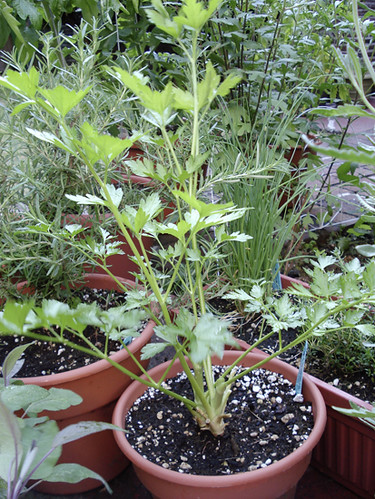
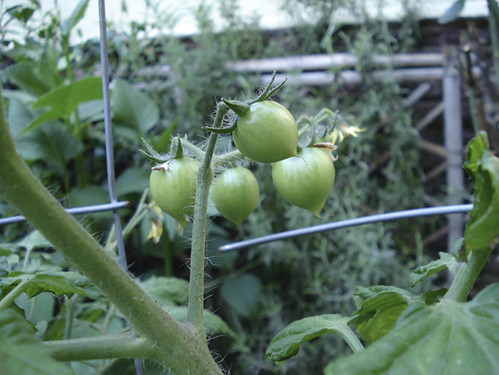
Nationwide, there has been a surge of activity this year from non-profits and artists in reviving the idea of victory gardens. We've actively followed the many projects, but I have to admit that it didn't exactly translate into bountiful rows of veggies in our yard. Blame it on apartment living. We did make some big improvements over last season, though - we got proper-sized containers, we increased the number of tomatoes we planted, and we tried a few new varieties. So far, so good. As small as our patio container garden is, I've really come to enjoy tending it. It's nice to walk out on our back stoop and water the plants in the evening, pinch back the buds on the basil, and obsessively check the growth of our tomatoes.
There is a lot we still have to figure out. We didn't fertilize. We didn't really pay much attention to sun/water needs. We still don't quite understand pruning. We certainly didn't start anything from seed. I can only imagine that gardening in the actual ground is even trickier. Still, we have picked up a few new tricks and our plants are doing worlds better than they were last year.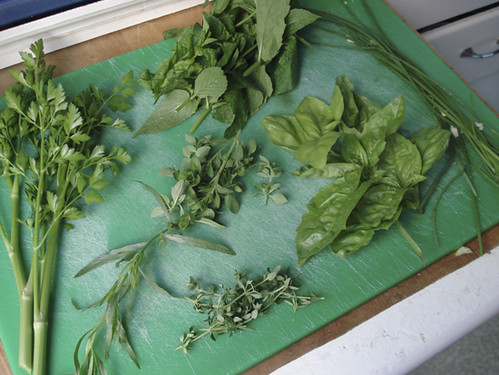
And in my imagination, we'll also be planting artichokes, brussels sprouts, tomatillos, chicories, climbing peas, pole beans, lovage, fenugreek, winter squash, potatoes, cavolo nero. It's fine to dream, but once I start planning out make-believe succession schedules and looking at plans for cold-frames and greenhouses, it might be time to remind myself that I'm a real greenhorn at this.


